politics

technology

sports

health

other

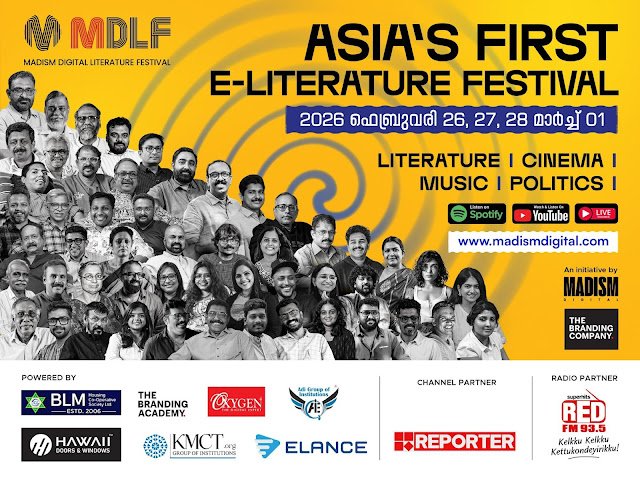
Historic Launch: Asia’s First & Largest Digital E-Literature Festival MDLF Begins from Kerala

Kerala
has scripted a new chapter in global literary history with the launch of the
MADISM
DIGITAL LITERATURE FESTIVAL 2026- MDLF 2026

positioned as Asia’s first and largest fully digital e-literature festival.
Officially inaugurated on February 26, the four-day digital cultural summit
marks a transformative milestone in the evolution of literary engagement in the
21st century.

Organised
by
MADISM DIGITAL | MADISM DIGITAL  a Kerala-headquartered new-age Malayalam
digital news platform, the inaugural edition of MDLF was held from February 26
to March 1 and streamed exclusively through the platform’s official social
media channels.

With
over 40 carefully curated sessions and more than 1 lakh live viewership across
the four days, the festival set a new benchmark for digital literary gatherings
in Asia. The overwhelming response from audiences across India and the global
Malayali diaspora reaffirmed the growing demand for meaningful intellectual
discourse in digital spaces.

Asia’s
First & Largest Fully Digital E-Literature Festival

The
Madism Digital E-Literature Festival distinguishes itself as Asia’s first and
largest e-literature festival conducted entirely in a digital format. By
eliminating geographical barriers and leveraging the power of technology, MDLF
democratizes access to high-quality literary and cultural conversations for
audiences worldwide.

Unlike
conventional literary festivals limited by physical venues, MDLF redefines
literary engagement by creating a borderless, inclusive, and globally
accessible platform rooted in Malayalam language and culture.

A
Confluence of Influential Voices

The
festival brought together an extraordinary lineup of contemporary thinkers and
creative leaders from literature, cinema, science, politics, music,
environment, and human rights — many of whom have significantly shaped modern
discourse.

Prominent
participants included:

Benyamin,
Kalpetta Narayanan, V. J. James, T. D. Ramakrishnan, Lijeesh Kumar, Francis
Noronha, Santhosh Echikkanam, Murukan Kattakkada, U. K. Kumaran, M. Swaraj,
Harish Vasudevan, Sunil P. Ilayidom, Unni Balakrishnan, Anto Augustine, Ethiran
Kathiravan, P. K. Rajasekharan, N. Prasanth IAS, Krishand, Gowri Lekshmi, M.
Jayachandran.

Through
these thought-provoking sessions, MDLF established itself as a forward-looking
intellectual platform deeply rooted in contemporary realities while embracing
global digital transformation.

A
Symbolic Logo Launch on Valentine’s Day

The
MDLF logo was unveiled on February 14 (Valentine’s Day), symbolically drawing
inspiration from evocative lines on love penned by departed literary legends.
The gesture represented a powerful blend of emotional legacy and digital
innovation — honouring the past while stepping boldly into the future.

CEO
Speaks: A Digital Literary Revolution

Speaking
about the historic launch, Suneesh S, Founder & CEO of Madism Digital,
said:

       
“MDLF is not just a festival; it is the
beginning of a digital literary revolution from Kerala to the world. At a time
when content consumption is rapidly shifting online, literature too deserves a
powerful global digital stage. By positioning MDLF as Asia’s first and largest
fully digital e-literature festival, we are creating a truly borderless
platform where ideas, creativity, and cultural dialogue can thrive without
physical limitations.

This
is only the first edition. Our vision is to expand globally — bringing
international writers, thinkers, and cultural leaders into future editions —
and transforming MDLF into one of the world’s most influential digital literary
movements.”

Madism
Digital’s Rapid Rise

In
a remarkably short span, Madism Digital has emerged as a dynamic Malayalam
digital media platform with strong audience engagement across social media
ecosystems. In January 2026, the platform further strengthened its footprint
with the launch of its official news website, reinforcing its role in shaping
Kerala’s evolving digital journalism landscape.

Headquartered
in Kerala, Madism Digital envisions MDLF as an annual global digital cultural
summit, with future editions expected to feature international authors,
cross-border collaborations, multilingual sessions, and a significantly
expanded global audience base.

Madism
Digital E-Literature Festival 2026 (MDLF)

Asia’s
First & Largest Fully Digital E-Literature Festival

Kerala
| February 26 – March 1, 2026

A
historic beginning — from Kerala to the world.
RSS Chief Mohan Bhagwat to inaugurate Jaisalmer’s Chadar Mahotsav; 10.8 Million Devotees Worldwide to Recite Collective DadaGuru Ektisa Path on March 7

Chennai : A three-day Chadar Mahotsav and DadaGuru Ektisa Path will be organized from March 6 to 8, 2026, in Jaisalmer, Rajasthan. Preparations at the Mahotsav venue in Jaisalmer are in full swing. The three-day programme will be inaugurated by RSS Chief Mohan Bhagwat.

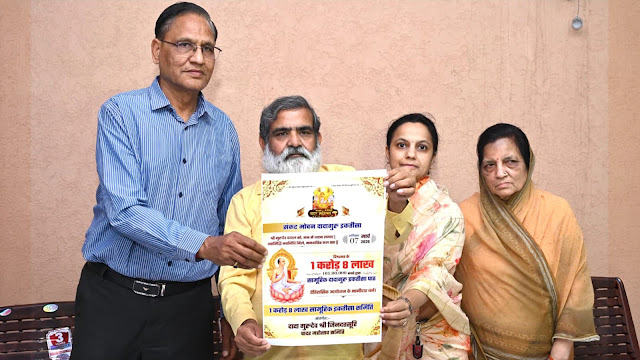
The special highlight of the programme will be the historic Mahasankalp on March 7, when (1 Crore 8 Lakh) devotees across the world will collectively recite the DadaGuru Ektisa Path simultaneously. The programme is being organized under the aegis of Dada Gurudev Shri Jindattsuri Chadar Mahotsav Samiti. Representatives from Rashtriya Swayamsevak Sangh, Vishwa Hindu Parishad, Hindu Adhyatmik evam Seva Sansthan, Vidya Bharati, and several social and cultural organizations will participate in the event.

The programme will be conducted in the pavan nishra of Gachchhadhipati Acharya Shri Maniprabh Suri Ji. The inspirational force behind this grand Mahotsav is Pujya Acharya Shri Jinmanojna Sagar Ji. The Chairman of Chadar Mahotsav Samiti is Maharashtra Government Minister Mangal Prabhat Lodha, and the Convener is former JITO Chairman Tejraj Golecha. Nearly 400 saints representing various Indian traditions will be present at the Mahotsav. Around 20,000 devotees are expected to attend the three-day programme.

First-ever Vidhi-Vidhan Abhishek after 871 Years

According to Chadar Mahotsav Samiti Chairman Mangal Prabhat Lodha, this campaign is not merely a religious ritual but a global movement of faith, unity, and spiritual awakening. At the designated time, devotees across cities in India and abroad will simultaneously perform the DadaGuru Ektisa Path, creating a collective spiritual resonance worldwide.

Under the inspiration of Pujya Acharya Shri Jinmanojna Sagar Ji, this initiative is taking the form of a global spiritual movement. During the Dada Gurudev Shri Jindattsuri Chadar Mahotsav, the Chadar will undergo a vidhi-vidhan Abhishek for the first time in 871 years. Prior to this, the Chadar will be brought from Jaisalmer Fort to the Mahotsav venue in a grand Varghoda procession. On March 8, Upadhyay Mahendrasagar Maharaj will be conferred with the Acharya Pad.

Devotees from Across the World to Join the Collective DadaGuru Ektisa Path

National Chairman of the DadaGuru Ektisa programme, Prakash Chandra Lodha, stated that the central highlight of the three-day Chadar Mahotsav, being held from March 6 to 8, 2026, in the pavan nishra of Gachchhadhipati Acharya Shri Jinmaniprabha Suri Ji, will be the historic Mahasankalp on March 7, 2026.

At the designated time, 10.8 million devotees worldwide will recite the DadaGuru Ektisa Path together, generating a powerful wave of spiritual energy at the global level.

Key Programmes Over Three Days

On March 6, the first day of Chadar Mahotsav in Jaisalmer, the Mahotsav will commence with the Mangal Pravesh of Gachchhadhipati Shri, Acharyas, Upadhyays, and Bhagwants. During the subsequent Dharma Sabha, RSS Sarsanghchalak Mohan Rao Bhagwat will be present. On this occasion, the Chadar Ceremony coin and a Special Postal Stamp will be released. In the evening, for the first time, a live theatrical presentation based on the life of Dada Gurudev will be staged.

On March 7, a Chadar Varghoda will proceed from Jaisalmer Fort. Following this, 10.8 million devotees worldwide will perform the DadaGuru Ektisa Path. In the afternoon, the Chadar Abhishek and Puja will take place. During the cultural evening, renowned musicians will present devotional performances at the Bhakti Mahotsav.

On March 8, Upadhyay Mahendrasagar Maharaj will be conferred with the Acharya Pad, along with the Ganini Pad ceremony. On the same day, Chadar Ok, Jal, and Vasakshep will be distributed.

Massive Dome Tents Under Preparation for a Month

Mahendra Singh Bhansali, President of Jaisalmer Jain Trust, stated that preparations for this historic programme of the Jain community are underway at Dedansar Ground, where massive dome tents have been under construction for the past month. Additionally, a museum is being developed at the venue. Around 20,000 devotees of DadaGuru Jindattsuri from across India and abroad are expected to arrive in Jaisalmer for this occasion. Notably, Jaisalmer district holds immense religious significance for the Jain community.

Sacred Chadar: A Centre of Unwavering Faith

According to Organizing Committee Secretary Padam Tatia, the first DadaGuru, Acharya Shri Jindattsuri, is regarded as a great spiritual Acharya of the 11th century. As per tradition, his Agni-Sanskar was performed on land granted by King Arnoraj in Ajmer. It is believed that during the Agni-Sanskar, the Chadar did not burn — an extraordinary and divine occurrence that remains a symbol of unwavering faith for devotees even today.

Historical references suggest that approximately one and a half centuries ago, the Maharawal of Jaisalmer had this Chadar brought from Anhilpur Patan to mitigate a devastating epidemic. Presently, the Chadar is preserved at Shri Jinbhadra Suri Gyan Bhandar located within Jaisalmer Fort. The Chadar Mahotsav is organized based on this sacred tradition.

Two-Day National Vidwat Sangoshthi

On March 7 and 8, 2026, a National Vidwat Sangoshthi will be organized on the theme: “Bharat ki Sanskritik Ekta, Samajik Sadbhav evam Samrasta mein DadaGuru Parampara ka Yogdan.”

Jodhpur University, Rajasthan University, Prakrit Bharati Sansthan, and the Centre for Society and Culture Studies, among other prestigious academic institutions, will participate as Knowledge Partners. Eminent Acharyas, Jain Sadhus and Sadhvis, and subject experts will be present during the Sangoshthi.

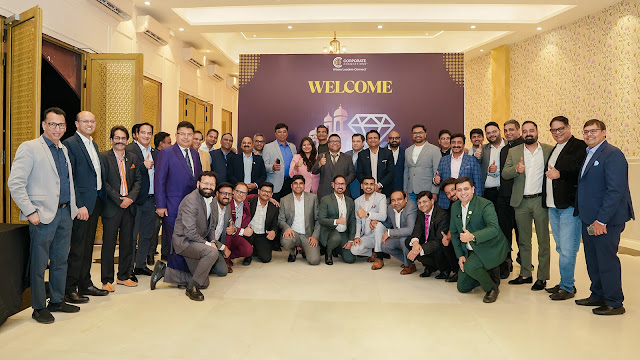
Jaipur: Corporate Connections (CC) Jaipur successfully hosted its Cross-Region Conclave today, bringing together an inspiring mix of entrepreneurs, leaders, and guests. The event witnessed enthusiastic participation from members of Corporate Connections Surat, alongside members from Ludhiana and Delhi, who joined the vibrant Jaipur community for an evening of collaboration and opportunity.

Led by Executive Directors Akshaya Goyal, Nitin Poddar, and Namit Soni, the Jaipur region reaffirmed its role as part of a dynamic global business community. The conclave featured engaging industry roundtables, meaningful one-to-one interactions, and high-value business discussions aimed at fostering inter-regional partnerships.

A key highlight of the gathering was the emphasis on exploring collaborative opportunities between Jaipur and Surat members, reflecting the community’s growing commitment to cross-chapter growth. Visiting delegations were felicitated with tokens of appreciation, celebrating the spirit of connection and shared success.

The Corporate Connections community now eagerly looks ahead to its much-anticipated national event next month in Surat, BHAF (Big Hairy Audacious Forum), where members from across the country will unite for another landmark experience.


Mumbai : Against
the backdrop of Valentine’s Day, Priya Kakade has urged citizens to remain
cautious amid rising cases of relationship disputes, digital affairs, and
matrimonial fraud. “If you feel suspicious in a relationship, instead of
engaging in direct confrontation or making decisions driven by emotions, it is
essential to verify the truth through legal and practical means,” she said.


Recent shocking incidents have unsettled
society. In the Raja Raghuvanshi murder case in Indore, it was revealed that
the wife had allegedly orchestrated the crime. Similarly, in the murder case of
Saurabh Rajput, who was serving in the Merchant Navy, his wife and her alleged
lover were arrested. These incidents have underscored the seriousness of
extramarital relationships and digital affairs.


Digital affairs, online chatting, social media
connections, and relationships formed through dating apps are increasing
rapidly. Affordable internet and widespread smartphone use have made it easier
to connect with strangers. While some relationships remain limited to online
flirting, others evolve into emotional attachments, leading to in-person
meetings and even financial transactions. In such situations, cases of honey
traps, financial fraud, and blackmail are also on the rise.


Kakade stated that certain signs of suspicious
behavior should not be ignored. Sudden behavioral changes, hiding mobile
phones, coming home late under the pretext of work, and frequent chatting with
unknown individuals may indicate potential risks. However, she emphasized that
instead of making allegations based solely on suspicion, one should conduct
preliminary verification before taking further steps.


“It is important to choose a reliable and
legally operating detective agency. Ensure confidentiality before sharing
information. Collecting digital evidence such as photos, chats, and call logs
can be helpful. However, avoid emotional decisions and act only after verifying
the truth,” Kakade clarified.


She also warned about fraud occurring through
matrimonial websites. A recent case in Pune involved a young IT engineer who
was cheated of lakhs of rupees. Under the pretext of marriage and citing
financial difficulties, the accused extorted a large sum and later absconded.
In such cases, police often treat them as family matters with limited
intervention, making thorough background verification before marriage
essential, she said.


Meanwhile, there has also been an increase in
inquiries from parents seeking to monitor the behavior of their children who
have come to Pune for education. Kakade mentioned that parents from various
states have approached her agency to gather information regarding their
children’s company, substance abuse, or risky behavior.


Through her organization, Swift Detective and
Investigation, she claims to have handled over 1,085 cases since 2006. The
agency collects evidence in cases related to extramarital affairs, financial
fraud, corporate investigations, and pre-matrimonial verification, assisting in
legal proceedings.


On the occasion of Valentine’s Day, she
emphasized that while celebrating love, priority should be given to trust,
transparency, and responsibility. “Love may be blind, but do not make blind
decisions,” was the message conveyed by Priya Kakade.


The
hardest part of being a creator in India is not creating content. It is earning
consistently.

India
has more than 4.5 million content creators today, spanning independent digital
creators and well-known celebrities. They shape consumer behaviour, influence
purchasing decisions, and drive cultural conversations. Yet for most of them,
content creation still does not translate into predictable income.

For
independent creators, the struggle is familiar. One campaign arrives
unexpectedly, followed by weeks of silence. Messages go unanswered.
Negotiations drag on. Income remains uncertain. Many eventually step away, not
because they lack skill, but because the system around them is unreliable.

Celebrities
face a different version of the same problem. Despite their reach, brand
conversations often move through multiple intermediaries. Managers, agents, and
coordinators add layers that slow decisions and dilute clarity. Deals are
delayed or dropped altogether, not due to lack of demand, but because access is
fragmented.

What
is changing now is the structure of the creator economy. Creators who build
clear positioning, remain professionally discoverable, and engage directly with
marketers are beginning to earn more consistently. The focus is shifting from
one-off collaborations to repeat relationships.

Platforms
like HashFame are emerging as part of this shift, acting as networking
infrastructure that enables direct connections between creators, celebrities,
and marketers. By reducing friction and improving access, they help turn
content creation from a gamble into a profession.

The
future of the creator economy in India will not be driven by virality alone. It
will be shaped by systems that allow creators to build stable, long-term
careers.

Creators
can download the HashFame app at
https://onelink.to/hfwapi

New Delhi, February 2026: The capital witnessed an electrifying blend of faith and festivity as Via Veda hosted a grand Maha Shivratri Bhajan Jamming Night at the Jawaharlal Nehru Stadium. What began with the serene notes of the Ganga Aarti soon transformed into a high-energy devotional concert, drawing thousands of attendees across age groups.

The evening seamlessly merged traditional chants with immersive soundscapes, creating what organisers called a “bhajan clubbing” experience. As chants of “Om Namah Shivaya” echoed under the open sky, the crowd swayed in unison, turning the stadium into a sea of raised hands and glowing phone lights.

Performers Suhas Sawant and Gajendra Pratap Singh took centre stage with powerful renditions of “Jai Mahakaal,” “Kailash Mein Niwasi,” and “Dulha Bane Hai Baba,” keeping the energy soaring through the night. Their performances struck a chord with the younger audience, many of whom described the event as a refreshing way to celebrate tradition.

Adding to the spiritual essence, attendees received Vibhuti from the Kashi Vishwanath Temple and 5 Mukhi Siddh Rudraksha from the Pashupatinath Temple. Prasad boxes were distributed, along with digital wallet credits for astrology consultations on the Via Veda platform — reflecting the brand’s fusion of heritage and technology.

Founder Kajal Bihani called the night “a celebration of collective devotion.” As midnight chants faded, a quiet calm settled over the venue — proof that even in a bustling metropolis, faith continues to unite.

Guest attended the event were Kiran Chopra Chairperson Punjab Kesari Group Aman Preet IRS, Poonam Anand, Nikita Khattar Arya, Anuj Lalwani, Sonia Sanjay Singh, Means Malhotra, Chaavi Tayal

A
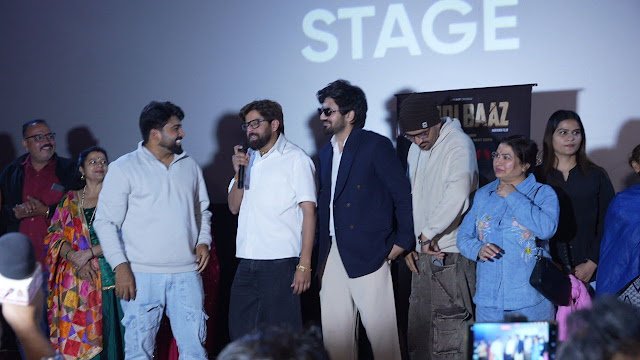
landmark moment for the Haryanvi entertainment industry unfolded as STAGE
officially released its 2026 Slate Video in front of the entire Haryanvi
film and music fraternity in Rohtak. The event turned into a celebration of
regional pride, scale, and ambition, with leading artists and creators
applauding STAGE’s vision. Echoing a collective sentiment, industry voices declared:
“Haryana is no less than Bollywood.” After watching the slate video,
reactions poured in from across the hall, with stars remarking:  “Now this is something big — the real fun
is just beginning.”

A
New Era for Entertainment in Haryana :

The
2026 slate video clearly showcases how STAGE is transforming the way Haryana
consumes and creates entertainment
. Built on an entertainment-first
philosophy
, the platform is redefining regional storytelling with ambition,
scale, and cinematic quality. In 2026, STAGE will release more than 62 new
titles
, making it one of the most aggressive and content-rich regional OTT
line-ups in the country.

Big Names, Bigger
Vision :

The
2026 slate features the presence of some of the most respected and popular
faces from Indian entertainment. The video prominently includes Randeep
Hooda
, underlining STAGE’s growing stature and credibility on a national
level. The upcoming year will see powerful performances on STAGE from Ashok
Pathak
, Yashpal Sharma, Pankaj Berry, Riddhima Tiwari,
KD, Aman Jaaji, Harsh Gehlot, Vijay Verma, Vicky
Kajla
, Rajesh Singhpuria, and Pradeep Duhan.

A Strong and Diverse
Content Line-Up :

The
STAGE 2026 slate includes a wide range of upcoming titles such as Ajooba,
Cab Killer, Dhaani, Vaada, Chidibaaz, Saaya, Khooni Kokh, Dujvar 2, Kesh Tantra
,
and Mahapunarjanm 2. Together, these projects span action, horror,
thriller, family drama, and emotionally rooted storytelling — all designed for
a wide and diverse audience.

Beyond Films: Every
Format, Every Audience :

STAGE
is not limiting itself to films alone. Viewers will also experience: Long-running,
episodic series
released weekly, similar to television formats. Short-form
microdramas
of just two minutes, tailored for today’s fast-paced digital
audience This multi-format approach ensures constant engagement and deeper
viewer connection.

Pioneering AI-Led
Storytelling :

In
a major technological leap, STAGE is introducing AI-powered films in
Haryana. The platform’s first AI-based project will be a biographical film on “Dada
Chotu Ram”
, blending regional history with cutting-edge technology.

From
Regional Roots to Global Reach :

According
to the founders of STAGE: “STAGE is no longer confined to being a regional platform.
Our goal is to take stories born in Haryana and other Indian regions to a global
audience
. Today, content for STAGE is being created not only by local
Haryanvi creators but also by leading creators from Mumbai, who are now
coming to Haryana to develop original stories exclusively for the platform.

The spectacular high-fashion finale merges glamour with a powerful new initiative to promote the vision of Maharashtra Tourism.

Mumbai, 17 February 2026 – Future Varsity Education Group proudly presented the Femina Miss India Maharashtra 2026 State Finale in an evening defined by couture glamour, elevated stage artistry, and contemporary Indian elegance. Hosted by Future Varsity Education
education group under the vision and direction of the Miss India
Organization, The TImes Group, the prestigious showcase was held in
Mumbai at the  Bal Gandharva Rangmandir Auditorium, bringing together
the finest blend of fashion, confidence, innovation, and purpose-driven
modern womanhood.

In
a historic milestone for Indian higher education, Future Varsity
Education Group (FVEG) has been granted the official license to host and
organize Femina Miss India state pageants across the states of
Maharashtra, Gujarat, and Haryana. The entire event was exclusively
managed by Future Varsity students, offering them unparalleled
real-world exposure to one of India’s most iconic platforms. From
strategic planning and production to creative direction, styling,
backstage coordination, media handling, and on-ground execution,
students take the lead in shaping the Femina Miss India experience in
their respective states. This initiative exemplifies Future Varsity’s
industry-integrated learning model, where education extends far beyond
classrooms into high-impact, large-scale experiential projects.

Headquartered
in Mumbai with operations in Delhi, Ahmedabad, Jaipur, and Dubai,
Future Varsity Education Group stands at the forefront of new-age higher
education. In collaboration with the University of Mumbai and
affiliated institutions, central universities, and global academic
partners, Future Varsity delivers industry-focused, globally relevant
programs that seamlessly combine academic excellence with professional
readiness. With an A++ NAAC-accredited university partner and over
15,000 successful alumni, the group has firmly established itself as a
leader in experiential learning and industry immersion.

Students
from Future Varsity’s diverse verticals – NAEMD, NASM, NAFDI, GAPA,
LSI, IMSR, and LivGlobal – collaborate seamlessly to organise the event
under the guidance and supervision of Miss India Organization, The Times
Group. This partnership embodies the institution’s forward-thinking
approach and the pageant’s commitment to innovation, inclusivity, and
youth-driven excellence.
Promoting the Vision of Maharashtra Tourism.
Aligning with the vision of Maharashtra Tourism, Future Varsity is
stepping beyond fashion to actively promote the state’s rich culture and
heritage through the finalists of the pageant.


The
evening opened with a powerful recap of the state selection journey –
featuring 10 large-scale auditions across Mumbai and Pune, witnessing
participation from 700+ contestants, and culminating in the selection of
the Top 16 finalists from Maharashtra, each representing ambition,
individuality, and next-generation leadership.

The
stage came alive with the Finalist Introduction Round, followed by the
technically polished Ramp Walk Round, expressive Introduction Round, and
an engaging Q&A Round, offering a complete showcase of beauty,
intellect, confidence, and stage command.

Celebrating individuality and standout attributes, sub-category titles were announced:

  • Miss Beautiful Smile – Parinaz Cooper

  • Miss Glowing Skin – Samaira Shah

  • Miss Rampwalk – Aarya Khairnar

  • Miss Photogenic – Tamanna Bharat

  • Miss Congeniality -Parinaz Cooper

The defining moment of the evening arrived with the grand Crowning Moment, where Rajnandini Pawar was officially crowned Miss India Maharashtra 2026, marking the beginning of her journey toward the national stage.

The
prestigious finale was evaluated by an eminent jury panel comprising
celebrated names across fashion, business, social impact, and wellness.
The panel included renowned Fashion Designer Ken Ferns, Titleholder
Nikita Porwal (Femina Miss India World 2024), Natasha Grover (Brand
& Operations Head, International Pageants, Miss India Organization,
The Times Group),  Mehermeet Kaur (Femina Miss India Haryana 2023),
Wellness and Lifestyle Mentor Parinita Mehta of MDM Group, Industry
Leader Nimish Ajmera of Ajmera Group of Companies, and Arshia Rashid,
(Femina Miss India Maharashtra & West 2024). Their collective
expertise ensured a holistic, merit-driven evaluation celebrating not
just beauty, but intelligence, purpose, and personality.


Sharing
her thoughts on the platform’s legacy, Nikita Porwal said, “Femina Miss
India has continued standing true to its vision of empowering talents
and championing womenhood. Witnessing the finalist perform with such
confidence and courage was truly rewarding and heartening. I
congratulate the organisers for putting up a good show.”

The
platform’s vision and execution are further strengthened by the
leadership and guidance of the Board of Directors, including
Dr. Balkishan Sharma, Founder and Chairman, Mr. Pravin Joshi, Founder Director along with Directors
Mr. Vipul Solanki, Ms. Suchi Kothari, Mr. Paras Mehta, Mr. Jatin Asher,
Mr. Jayesh Gada, Mr. Vishwadeep Newton, Mr. Gopal C. Sharma, Mr. Sumeet
Singhania, and Shakir Shaikh – Fashion Choreographer, Show Director for
the evening & Director, Nest Academy of Modelling & Grooming
(NAMG)
, Dr. Sneha Asar & Mr. Rishi Sharma
whose collective expertise across education, business, creative
direction, and strategic leadership continues to elevate the Femina Miss
India Maharashtra platform to new benchmarks of excellence.

This
historic edition is proudly supported by our valued partners — Yuri
Woori (Co-powered by), Kosmoderma (Associate Partner), Dentokraftt
(Smile Care Partner), Hello Student (Accommodation Partner), Big FM
(Radio Partner), and The Sports Gurukul (Fitness Partner), in
association with Face of Mumbai and Modcast. Their collaboration
elevates the platform, empowering our finalists to shine at their
absolute best.

The
grand finale was evaluated by a distinguished panel of industry leaders
across fashion, business, wellness, and social impact, ensuring a
holistic and merit-driven selection process. With strong presence from
the fashion fraternity, media, and cultural influencers, the evening
reaffirmed the platform’s legacy as India’s most aspirational gateway to
global pageantry – seamlessly merging education, industry, and
empowerment under the visionary leadership of Future Varsity Education
Group.

The
Femina Miss India Maharashtra State Finale 2026 continues to stand as a
symbol of aspiration – where fashion meets purpose, and dreams step
confidently onto a national runway.

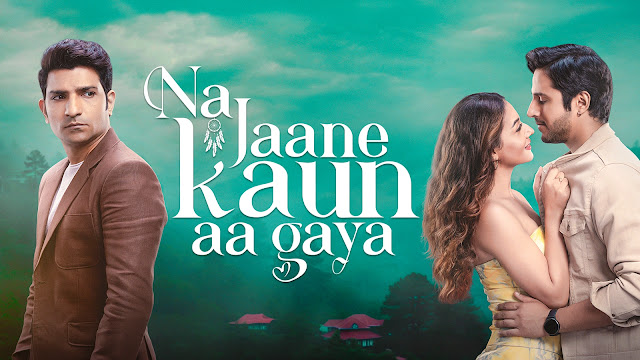
In an era where love is often celebrated as pure and beautiful, Na
Jaane Kaun Aa Gaya starring Secret Game fame Jatin Sarna, criminal
justice fame Madhurima Roy and  Pranay Pachauri also can be mentiondares
to explore the side no one talks about — toxic attachment, emotional
destruction, and love that turns into psychological warfare. This is not
just a love story. This is a story of obsession, betrayal, emotional
scars, and the dangerous cost of loving the wrong person.

The 1
minute 10 seconds teaser opens like poetry dipped in venom — haunting
verses layered over breathtaking visuals of Uttarakhand, where beauty
hides darkness beneath silence. The teaser slowly pulls the audience
into a world where emotions don’t heal — they burn.

The film
brings together intense performers Jatin Sarna, Madhurima Roy and Pranay
Pachauri in a volatile love triangle where trust is fragile, loyalty is
an illusion, and love is both a weapon and a weakness. Known for his
explosive performance in Sacred Games, Jatin Sarna steps into one of his
darkest emotional roles yet — a man consumed by love, ego, and silent
rage. Opposite him, Madhurima Roy, known for her layered performance in
Criminal Justice, brings vulnerability mixed with emotional
unpredictability, making her character both irresistible and complex.
The
teaser moves through close-up emotional breakdowns, intense
confrontations, passionate romance, and moments that feel emotionally
suffocating. In one chilling moment, Madhurima’s character questions
morality itself — asking if love can justify wrong choices. The teaser
then spirals into visuals of love turning into hate, obsession turning
into revenge, and emotions turning uncontrollable.

The final
visuals are haunting — Pranay Pachauri playing a mouth organ in
isolation, followed by Jatin Sarna burning a giant swing with a
matchstick — a symbolic end to innocence, childhood, and pure love —
ending with a cry that feels like grief mixed with revenge.

Speaking
about the film, Jatin Sarna said, “Modern relationships are
complicated. Trust breaks faster today. Betrayal is normalised. And love
— love is the most difficult emotion to understand. This film shows how
love can heal you… or completely destroy you.”

Madhurima Roy
shared, “Today relationships survive on conditions. Ego, fear,
insecurity — everything interferes. This story shows how love can become
toxic, how betrayal changes who you are, and how sometimes love itself
becomes the biggest emotional battlefield.”

Produced under the
banner of Dhawan Films and Vikas Arora films the film is scheduled for
theatrical release on 6th March 2026. It is produced by Vipul Dhawan and
Pooja Arora, co-produced by Reet Arora and directed and edited by Vikas
Arora. The story, screenplay and dialogues are written by Amal Singh
and Vikas Arora. The music is composed by Devendra Ahirwar, Prini
Siddhant Madhav and Kartik Kush.

With its raw emotional
brutality, psychologically intense storytelling, and a brutally honest
take on modern love, Na Jaane Kaun Aa Gaya is not just a film — it is an
emotional experience that refuses to comfort the audience. It forces
them to confront one terrifying question — Can love justify the choices
we regret?

Official Teaser Link: https://youtu.be/DA17Z6LEE_g

How civilizational knowledge, ignored by Western computer science, became the foundation for a global movement

New Delhi [India], February 16: Shekhar Natarajan, Founder and CEO of Orchestro.AI, explains the impact of India’s contribution to the global AI, an influence that could change narratives in the long run. 

The journey from a one-room house in Secunderabad to reshaping global AI discourse extends beyond geography. It spans paradigms, intellectual traditions, and fundamentally different assumptions about what intelligence means and what it should serve.

Shekhar Natarajan’s contribution to artificial intelligence—the framework he calls Angelic Intelligence—draws explicitly from civilizational knowledge that Western computer science has largely ignored. The 27 Digital Angels at its core aren’t arbitrary designations or marketing constructs. They’re rooted in Sanskrit concepts of virtue that predate modern computing by millennia, adapted for a technological context their originators could never have imagined.

 America taught me to build systems. India taught me why they should exist. 

The biographical details are remarkable even before considering the ideas they produced. Natarajan arrived in America with $34. His mother pawned her wedding ring—for 30 rupees—to fund his early education. She stood outside a headmaster’s office for 365 consecutive days to secure admission to the school, refusing to leave until the door opened.

These aren’t details Natarajan mentions for sympathy or narrative color. He cites them as foundational to understanding why his AI framework prioritizes dignity over efficiency, why it treats human worth as non-negotiable rather than as one variable among many to be optimized.

“When you’ve seen what sacrifice looks like—real sacrifice, the kind that costs everything—you understand what systems should protect. My mother didn’t stand outside that office for 365 days so I could build AI that treats human dignity as a rounding error.”

The intellectual migration runs in both directions, and understanding this bidirectional flow is essential to understanding the framework itself. Natarajan received an American technical education at Georgia Tech, MIT, and Harvard Business School. He accumulated American corporate experience at the highest levels of Walmart, Disney, Coca-Cola, PepsiCo, Target, and American Eagle. He holds over 207 patents, most filed in the American intellectual property system.

But the synthesis—the framework that has now reached 800 million screens—occurred when he applied Indian philosophical traditions to problems that American technical approaches had created. The result is neither purely Western nor purely Indian. It’s something new, born from the collision of traditions.

 India didn’t just give the world yoga and zero. It gave us the architecture for AI that serves rather than dominates. 

The specific intellectual heritage deserves attention. The Sanskrit concepts underlying the 27 Angels aren’t religious prescriptions but frameworks for understanding consciousness, ethics, and the relationship between capability and character. They emerged from traditions that spent millennia considering questions Western philosophy has only recently begun to ask: What is the nature of the mind? What obligations accompany power? How should wisdom relate to action?

Western AI development, rooted in a different intellectual tradition, has largely treated these as implementation details to be addressed after capability is achieved. Build the system first; add the ethics later. The approach has produced remarkable technical progress and growing unease about where that progress leads.

“The American approach to AI is essentially colonial—extract maximum value, worry about consequences later. The Indian philosophical tradition asks different questions: What does this serve? What does it protect? What does it dignify? Natarajan’s framework brings those questions into the architecture itself.” — a professor of comparative philosophy at a major research university, speaking on background

The global reception of Angelic Intelligence suggests an appetite for non-Western approaches to technology that extends far beyond diaspora communities. The strongest early adoption came from regions that have experienced the downsides of optimization-first AI: algorithmic labor management that reduced workers to performance metrics, automated surveillance that stripped privacy from communities, efficiency-driven systems that displaced populations without accounting for what was lost.

The human costs are documented. In fulfillment centers worldwide, AI systems track worker movements to the second, flagging bathroom breaks as ‘time off task.’ Delivery drivers report urinating in bottles to satisfy route optimization algorithms. Call center workers are scored by AI that measures their emotional tone, penalizing them for sounding tired during twelve-hour shifts. A worker in an Amazon warehouse described being ‘managed by a robot that doesn’t know I’m human.’ These systems aren’t malfunctioning. They’re functioning exactly as designed—to optimize metrics at any human cost.

In these contexts, the framework resonated not as abstract philosophy but as recognition. Populations who had been optimized rather than served saw in Angelic Intelligence an acknowledgment of their experience—and an alternative.

“When you’ve been on the receiving end of AI that treats you as data to be processed, a framework that starts with dignity doesn’t sound academic. It sounds like someone finally understood what we’ve been living through.” — a community organizer in Indonesia who has become an advocate for the framework

 The future of AI isn’t being decided in Palo Alto. It’s being chosen in every village that decides what intelligence should mean. 

There’s an irony worth noting. The same American tech industry that initially overlooked Natarajan’s framework—that passed on funding it, that didn’t cover it in mainstream technology media, that treated it as philosophically interesting but practically irrelevant—is now seeking audiences to understand why it resonated so deeply with populations they hope to serve.

“We spent years trying to export American AI to India and the Global South. Now we’re trying to understand why Indian AI philosophy is exporting itself. The market is telling us something, and we’re only beginning to hear it.” — an executive at a major technology company’s emerging markets division

The 800 million views represent more than engagement metrics. They represent a referendum on whose ideas about AI will shape what comes next—and an indication that the answer may not come from where the industry expected.